
Fabric Walls Versus Popups: Which Fits Your Event?
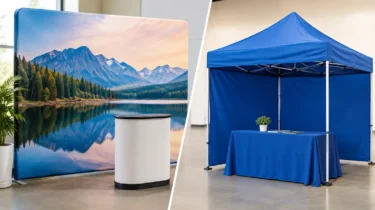
A 3m backdrop can look excellent in a showroom and still create unnecessary work at a busy exhibition. That is the real decision behind fabric walls versus popups: not simply which display looks best in a product photograph, but which one suits your team, venue, transport plan and event programme.
Both formats can create a professional branded presence quickly. The right choice depends on how often you exhibit, how much flexibility you need on site and whether the display is a standalone backdrop or part of a wider branded space.
Fabric walls versus popups: the practical difference
A fabric wall is normally built around a lightweight aluminium frame, with a printed tension-fabric graphic fitted over it or attached to it. Once assembled, the fabric stretches across the structure to create a clean, continuous display surface. The result is usually a more refined, architectural finish than a traditional portable backdrop.
A popup display uses an expanding frame that opens into position, with printed graphic panels or fabric graphics attached to the frame. It is designed for fast setup and compact storage. Popups have been a dependable choice for years because the hardware is familiar, portable and well suited to smaller exhibition footprints.
The distinction matters most when visitors are close to the display. A tension-fabric wall presents one uninterrupted branded image, with no visible panel joins in most configurations. A popup can still look polished, particularly with a fabric graphic, but the structure is usually more limited in size, shape and configuration.
Neither is automatically the better investment. A popup may be the sensible answer for an occasional exhibitor attending a local conference with a small team. A fabric wall may justify its higher specification where brand presentation, repeat use and a premium finish are central to the event.
When a fabric wall is the stronger choice
Fabric walls work particularly well where a display needs to feel like part of a complete stand rather than a portable banner replacement. Their clean finish makes them effective for product launches, corporate conferences, shell-scheme stands, retail activations and press or photography backdrops.
The graphic quality is a major advantage. Dye-sublimated fabric produces rich colour and a matte surface that is less prone to glare from exhibition lighting than some printed panel systems. This is useful in venues with strong spotlights, large windows or extensive overhead lighting. It also helps when staff will be photographed in front of the stand throughout the day.
Fabric systems offer more scope for scale and configuration. Straight walls, curved displays, angled returns, meeting areas and integrated storage can be planned around the available stand space. For exhibitors building a consistent presence across several events, fabric graphics can be changed while the frames are retained, helping to manage repeat-event costs.
They are also practical once the right process is in place. The frames are lightweight, many systems assemble without tools, and fabric graphics can often be folded for transport. However, a large fabric wall is not always a one-person job. A 6m wall, a high frame or a display fitted with lighting and accessories needs sensible installation planning, enough clear floor space and a team that understands the build sequence.
For a larger exhibition programme, fabric walls are most effective when they are considered alongside flooring, counters, screens, product displays and venue services. A striking backdrop can lose impact if it is positioned around a poorly planned power point, blocked by storage cases or installed without enough space for visitors to engage with the team.
Best suited to
Fabric walls are generally the better fit for businesses that exhibit regularly, need a premium continuous graphic finish, or want a system that can grow into a modular branded environment. They are also a strong option where the same hardware will support refreshed campaigns, new messaging or different stand layouts over time.
When a popup display makes more sense
A popup display earns its place through speed and simplicity. The frame opens out from a compact package, the graphics are fitted, and the display is ready for use with minimal components. For teams travelling to a conference by car, attending a one-day roadshow or setting up without a dedicated build crew, that convenience has real value.
The storage footprint is another benefit. A popup is easier to keep in an office cupboard or take between venues than a larger modular system. Many models pack into a wheeled case, which can also be adapted into a branded counter. This reduces the number of separate items required for a modest event setup.
For small spaces, a popup can provide all the visual impact required. A well-designed graphic, clear message and good lighting will usually do more for lead generation than an oversized stand filled with unnecessary hardware. If your objective is to give sales staff a credible backdrop at a regional exhibition, a popup offers a practical, cost-conscious route.
There are limits to consider. Traditional panel popups can show joins between graphic sections, and the display shape is usually fixed. The frame is less adaptable than a modular fabric system if you later need corners, storage rooms, shelving or integrated media. Replacing individual panels can also create colour-matching considerations if the original artwork or print specification has changed.
Fabric graphic popups reduce some of these concerns by creating a softer, more continuous appearance. They sit between a conventional popup and a full tension-fabric wall, making them useful where quick assembly is the priority but the brand requires a more modern finish.
Compare the full event cost, not just the display price
The purchase price is only one part of the decision. A display that costs less upfront can become the more expensive option if it needs frequent replacement, cannot be adapted to new stand sizes or takes internal staff too long to prepare and install.
Start with transport. Consider whether the system can travel in your own vehicle, whether it requires courier delivery, and how it will move from the venue loading bay to the stand. Exhibition halls often involve long distances, timed access windows and limited lifting equipment. A compact popup can reduce this burden, while larger fabric walls may need delivery coordination and planned installation.
Then consider graphic replacement. If your campaign messages, product range or visual identity change regularly, reusable frames with replacement fabric graphics can provide better long-term value. If the display will carry a stable corporate message for occasional events, a popup may remain suitable for years with careful handling.
Finally, account for staff time and risk. Internal teams can assemble many portable displays, but there is a point where self-build creates avoidable pressure. A stand involving electrics, flooring, screens, hanging signs, storage or venue documentation needs coordinated delivery. Risk assessments and method statements are not an optional extra where a professional installation team is working on site.
Questions to ask before choosing your format
Your display choice should follow the event brief, not lead it. Ask how much floor space is booked, where visitors will approach from and whether the stand needs to support conversations, demonstrations or product display. A 3m wall behind a table has different requirements from a 6m x 3m space intended for appointments and presentations.
Consider how often the hardware will be used and who will set it up. If several regional teams need to use it independently, a straightforward popup or compact fabric system can be the right operational choice. If a central events team is delivering multiple larger shows, a reusable modular setup with professional installation may offer greater control.
Also check venue rules early. Some venues require plans, health-and-safety documentation, electrical orders, specific floor-loading information or approval for certain build elements. Planning these details alongside the display avoids last-minute compromises, such as a wall positioned away from its intended location because power, internet or access requirements were missed.
Build a display that can work beyond one event
The most useful exhibition hardware is rarely the most elaborate. It is the system that supports your sales and marketing team repeatedly, presents the brand consistently and can be transported, stored and reconfigured without creating a fresh project every time.
For some businesses, that will be a compact popup with strong graphics and a counter. For others, it will be a tension-fabric wall or modular stand designed around several different event footprints. Trade Show Solutions can help plan the hardware, graphics, venue services and installation as one coordinated requirement, rather than leaving your team to join the pieces together.
Choose the format that gives your people confidence on event day. When the display is right for the space and properly planned around the practical details, the team can focus on the conversations that make exhibiting worthwhile.