
Printed Boards Versus Fabric Walls: Which Fits?
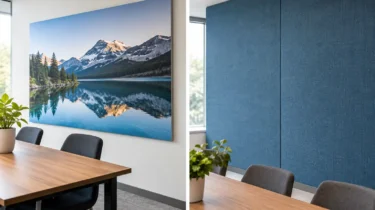
A display can look excellent in a visual mock-up and still create unnecessary work once it reaches the venue. The practical choice in printed boards versus fabric walls comes down to more than appearance: it affects transport, storage, build time, graphic replacement, stand configuration and the way your team works on site.
Both formats can create a polished branded presence at exhibitions, conferences, roadshows and retail activations. Neither is automatically the better option. Rigid printed boards are often the right answer for permanent-looking structures, precise signage and high-wear environments. Tension-fabric walls are often better where portability, rapid assembly and repeated use matter most. The right decision starts with the event plan rather than the print specification.
Printed boards versus fabric walls at a glance
Printed boards use rigid substrates such as Foamex, DiBond, acrylic or Correx. They can be fixed directly to walls, installed into shell-scheme systems, mounted to frames or used for freestanding signage and shaped display elements. The finished surface is firm, flat and well suited to graphics that need crisp edges, accurate alignment or a more architectural feel.
Fabric walls use a printed polyester graphic tensioned across a lightweight aluminium frame. Depending on the system, the graphic may use a silicone edge that pushes into a channel, or be pulled over a tubular frame like a fitted cover. The result is a smooth, large-format branded wall that packs down into compact cases and can be assembled without tools.
The visible result may be similar from a distance. The operational difference is substantial. A three-metre fabric wall may travel in a wheeled case and be built by an exhibitor team, while a board-backed wall of the same size may require more careful protection, a larger vehicle, skilled installation and a plan for disposal or storage after the event.
When printed boards are the stronger choice
Rigid boards work particularly well when the display needs to feel fixed, engineered or integrated into a wider exhibition build. DiBond, for example, offers a durable aluminium composite finish for long-term signage, while Foamex provides a versatile option for exhibition graphics, presentation boards and internal event branding. Acrylic can add a premium, high-gloss element where the design calls for it.
Boards also suit applications where physical interaction is expected. Directional signs, product information panels, menu boards, retail point-of-sale displays and registration signage all benefit from a stable surface that will not move if visitors brush past it. Where graphics must be cut to a custom shape, mounted with stand-offs or paired with shelving, screens and product fixtures, rigid materials are usually easier to specify and install.
They are a sensible choice for shell-scheme stands too. A set of accurately sized printed panels can cover standard walling efficiently, creating a clean branded backdrop without building a full stand. For a single event, particularly one with a straightforward footprint and limited need for future reconfiguration, this can be a commercially sensible route.
There are trade-offs. Boards are more vulnerable to corner damage in transit, need protective packing and take up more storage space. Large panels may need delivery on a lorry or van, timed access to the venue and an installation team to position them safely. They must also be planned carefully around venue rules, wall-fixing restrictions, fire requirements and permitted build heights.
Where fabric walls earn their place
Fabric walls are designed for exhibitors who need a high-impact backdrop without the weight and handling associated with rigid panels. The frame components are lightweight, the graphic folds down for transport, and the system can usually be assembled quickly on site. This makes fabric particularly useful for conferences, roadshows, pop-up activations and teams attending several events each year.
A tension-fabric graphic creates an uninterrupted branded surface. There are no visible panel joins across the face of the wall, which is valuable for large photographic imagery, gradients and bold brand colour. With the right frame, fabric can be used for straight walls, curved displays, meeting areas, counters and lightboxes, giving a coordinated look across the stand.
The reusable frame is a major advantage. When the campaign changes, the hardware can remain in service and only the fabric graphic needs replacing. That lowers the cost and material requirement of refreshing a message for a new product launch, a seasonal campaign or a different audience. It also allows an event team to keep proven hardware while adapting the stand from show to show.
Fabric is not ideal for every job. It does not provide a hard surface for attaching heavy products, shelves or complex interactive equipment without additional structure. It can also be less suitable where a sign needs to withstand regular touching, close-up handling or exposure to wet outdoor conditions. The graphic must be folded and packed correctly after use to avoid unnecessary creasing, and spare graphics need clean, dry storage.
Consider the stand, not just the wall
The strongest exhibition spaces commonly use both materials. A fabric wall may create the main visual backdrop, while printed Foamex or DiBond panels provide wayfinding, product messaging, price information or a durable branded fascia. Acrylic lettering may add depth at reception, and rigid panels can finish the sides of a counter or support a display screen.
This combined approach is especially effective on modular stands. A reusable T3 structure, for example, can form the layout, support lighting and create practical zones for demonstrations, meetings and storage. Fabric graphics can cover large visual areas, while rigid elements are introduced where the design needs strength, precise detail or functional mounting points. The result avoids forcing one material to do work better handled by another.
Before selecting a format, consider the visitor journey. If people will approach the display from a distance, the priority may be a large, clean graphic with strong brand recognition. If they need to read detailed information, collect literature or interact with products, the stand may need more rigid signs, counters and display fixtures. The material choice should support that journey.
Transport, installation and venue logistics
Exhibition decisions are often made on visual preference, then complicated by practical details two weeks before the event. This is where the difference between boards and fabric becomes clear.
Fabric systems are generally easier to send by courier, carry through a venue and store between events. They are well suited to locations with limited loading access, tight build schedules or internal teams travelling by car. A well-designed frame is tool-free, reducing the need for specialist equipment and shortening the time spent on stand build.
Printed boards require more delivery planning but can still be straightforward when managed correctly. The panel sizes must work with venue access routes, lifts and loading-bay restrictions. Installation may need to be scheduled around contractor access, especially if the boards form part of a larger stand build involving flooring, electrics, internet provision or overhead signage.
For either format, venue documentation matters. Risk assessments and method statements should reflect how the display will be delivered, built and removed. Large rigid panels may require two-person handling. Fabric frames need secure assembly and, where relevant, appropriate ballast or fixing. If electrics, screens or lighting are incorporated, cable management and power positions need to be settled before the graphics go to print.
How to make the right specification
Start by defining how often the display will be used. A one-off exhibition with a fixed shell-scheme footprint may favour printed boards. A programme of regional events, conferences and sales roadshows is more likely to justify reusable fabric hardware and replacement graphics.
Then look at what the display has to do. Choose rigid boards where you need hard-wearing signage, custom-cut forms, mounted elements or a premium structural finish. Choose fabric where you need large-format branding that travels efficiently and can be built quickly. If the answer includes both, plan the materials together rather than treating signage as an afterthought.
Budget should include the full lifecycle, not just the first print run. Consider packing, transport, storage, installation labour, replacement graphics and the cost of adapting the display for the next event. A lower initial print cost can become less attractive if the display is difficult to move or cannot be reused. Equally, reusable fabric hardware is only good value when it suits the intended format and will be used often enough.
It also pays to involve your display supplier early. Accurate artwork templates, sightline planning, substrate selection and installation sequencing prevent the familiar problems of cropped logos, inaccessible fixings and panels that cannot reach the stand through the service entrance. One coordinated plan makes it easier to align graphics with flooring, furniture, electrics and the wider event timetable.
The best display material is the one that makes your brand look considered while making the event easier to deliver. Choose boards when permanence, structure and hard-working signage lead the brief. Choose fabric when mobility, reuse and fast assembly carry more weight. A well-planned combination can give you the visual impact of a finished stand and the practical flexibility to use it again with confidence.