
How to Design Reusable Trade Show Signage
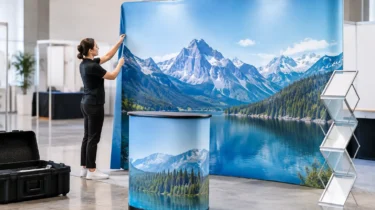
A stand that looks excellent at one exhibition but cannot adapt to the next is an expensive one-off. To design reusable trade show signage properly, start with the event programme rather than a single floorplan. Your display needs to carry the brand clearly while allowing for different stand sizes, campaign messages, venue rules and transport requirements.
For businesses attending several trade shows, conferences or roadshows each year, reusable signage reduces repeat production, shortens preparation time and keeps the physical brand consistent. The best result is not simply a collection of printed panels. It is a planned system of hardware, graphics and practical event components that can be reconfigured without creating unnecessary work for your team.
Start with the parts that should stay the same
Reusable signage works best when permanent brand elements are separated from campaign-specific content. Your logo, core colour palette, standard imagery and key brand messages are likely to have a longer life than a product launch, seasonal offer or event-specific call to action.
This distinction should shape the display from the outset. Invest in durable framework, counters and structural graphics that will work across your event calendar. Then use replaceable fabric skins, graphic panels or add-on signs for information that changes frequently. A modular stand can retain the same branded structure while presenting a different product category or sales message at each show.
It depends on how often your marketing changes. A business with stable services may get several years from a large-format backwall graphic. A company launching new products every quarter will benefit from keeping the main framework neutral and updating smaller, more focused graphics.
Build a clear visual hierarchy
Visitors rarely read an exhibition stand from left to right. They first notice the tallest and boldest elements, then decide whether the message is relevant before approaching. Reusable signs need a hierarchy that works at a distance as well as close up.
Place the business name and primary message high on the stand, where they remain visible over neighbouring displays and footfall. Use concise secondary messages on walls, counters or freestanding signs. Product detail, specifications and longer explanations belong at eye level or within the meeting area, where staff can support the conversation.
Avoid making every panel compete for attention. A stand packed with text may technically include every message, but it will not help visitors understand what you do in the few seconds available from an aisle. Leave enough clear space for the brand to register.
Choose hardware before committing to graphic sizes
Graphic design is often approved before anyone has confirmed the display hardware. That can lead to artwork that is awkward to reuse, difficult to install or unsuitable for the next venue. Establish the frame, panel or fabric format first, then design to the exact visible area, bleed and fixing method.
Tension-fabric displays are a practical option for portable branding. The fabric is lightweight, packs down efficiently and can be replaced while retaining the same frame. They are well suited to backwalls, curved displays, lightboxes and freestanding fabric structures where a clean, high-impact finish is required.
For larger or changing spaces, a T3 modular system offers more flexibility. Tool-free frames can be configured as walls, meeting areas, towers, counters and storage spaces, then reworked for a different footprint. This makes it possible to use the same core hardware for a compact shell-scheme space one month and a larger island or corner stand later in the year.
Rigid signs still have a place. Foamex can be useful for short-to-medium-term interior messaging, while acrylic and DiBond provide a more premium or hard-wearing finish for signs that need to stay in service. Correx is lightweight and economical for temporary directional signage. The right material depends on the sign’s intended lifespan, whether it will travel repeatedly and the finish expected by your audience.
Design reusable trade show signage for changing spaces
An exhibition stand is never viewed in isolation. Ceiling height, available wall space, access routes, lighting and neighbouring stands all affect what visitors see. Reusable signage should therefore be designed in modules, not as one oversized visual that only works in a single layout.
Divide backwalls into sections that can stand alone or join together. Create graphic panels that fit standard bays, so they can move from a 3 m space into a 6 m configuration without leaving obvious gaps. Where possible, keep key statements on independent panels rather than running them across multiple joins.
A practical modular signage plan might include a primary backwall, two side panels, a counter graphic, a product demonstration panel and smaller directional signs. These can be used together for a major exhibition or selected individually for a roadshow, conference sponsorship area or retail activation.
Think carefully about what happens when part of the system is not used. A panel designed only to work in the centre of a three-wall display may look incomplete when used alone. Give each reusable component a purposeful layout, even if it is normally part of a larger environment.
Allow for installation, transport and storage
A display can be reusable only if it is realistic to move, store and build. Large rigid panels may look impressive but require more handling space, protective packaging and careful transport. Fabric graphics are generally easier to carry and store, but need the correct frame, labelling and packing process to prevent delays on site.
Label every case, frame section and graphic clearly. Keep an inventory showing what belongs to each configuration, along with artwork references and replacement dates. This is particularly valuable where several teams or agencies use the same event assets throughout the year.
Installation should also influence the design. Check whether graphics require specialist fixings, whether the stand can be built by your team or needs a professional crew, and how long venue access allows. A tool-free modular system can reduce build complexity, but larger structures may still need coordinated installation, especially where electrics, flooring, lighting and internet connections are involved.
Make graphics easy to update without starting again
The commercial value of reusable signage comes from replacing only what has changed. Design campaign graphics as defined, removable sections rather than printing a new stand every time your proposition evolves.
For example, a permanent fabric backwall can carry the master brand and a broad statement of capability. Interchangeable panels can then feature sector-specific applications, a new product range or a show-only offer. Magnetic, framed or fabric solutions can work well, provided the fixing method is tested and the joins are considered during design.
Maintain an artwork system that makes updates straightforward. Use consistent templates, approved brand colours and typefaces, and clear rules for image resolution. Large-format print exposes low-resolution photographs, weak contrast and poorly prepared files very quickly. Viewing distance matters, but it does not excuse a graphic that appears soft or pixelated from a few metres away.
Also plan for replacement. High-touch counter graphics, floor-level panels and signs positioned near catering areas will wear sooner than overhead branding. Ordering a spare skin or replacement panel alongside the initial production can prevent a small damaged area from affecting the whole stand’s appearance.
Plan the complete visitor environment
Reusable trade show signage is more effective when it supports how people move through the space. A backwall attracts attention, but visitors also need to identify where to speak to staff, where demonstrations happen and whether a meeting area is private or open.
Bring the same visual system into counters, literature points, product plinths, wayfinding and meeting furniture. This does not mean branding every surface. It means using a consistent level of colour, messaging and finish so the space feels organised rather than assembled from unrelated items.
Do not overlook venue requirements. Signage design may need to accommodate fire exits, sightline restrictions, shell-scheme rules, height limits and safe cable management. If screens, illuminated displays or demonstrations are included, electrics and internet need planning well before build day. Risk assessments and method statements should reflect the actual stand design and installation method, not be treated as paperwork added at the end.
Test the system before the event calendar begins
Before committing to a full programme, build the reusable system in a controlled space. Check that graphics align, frames connect correctly, cases contain the right components and the display can be erected within the planned time. Photograph each approved configuration to create a useful installation reference.
This test often reveals small issues that are inexpensive to fix before an event: a message hidden behind a counter, a panel that cannot be reached during assembly, a heavy case that is difficult to move, or a graphic that needs stronger contrast under venue lighting.
A well-designed reusable system gives your team confidence as much as it saves print spend. With the right modular hardware, adaptable graphics and managed installation, each event can feel purpose-built without requiring the whole environment to be produced from scratch. Trade Show Solutions can help turn that plan into a display package that arrives organised, compliant and ready to represent the business well.