
Modular Versus Bespoke Stands for Events
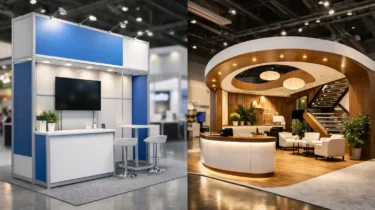
A 6m x 3m space at a busy exhibition can represent a significant share of an event budget. The choice between modular versus bespoke stands affects more than how the finished space looks. It determines how easily the stand can be adapted, transported, stored, installed and reused across the rest of your event programme.
For some exhibitors, a fully custom build is the right way to create a major brand moment. For others, a modular system with tailored graphics delivers a premium result with better long-term value. The right answer depends on your objectives, venue, event calendar and the practical demands behind the scenes.
What is the difference between modular and bespoke stands?
A modular stand is built from reusable, standardised components that can be configured to suit different stand sizes and layouts. With a system such as T3, frames connect tool-free and can support walls, towers, meeting areas, storage, counters, shelving and integrated graphics. The same hardware can then be reconfigured for another venue or exhibition.
A bespoke stand is designed around a particular brief, footprint and visual concept. It may use custom joinery, shaped structures, specialist finishes, suspended features, tailored lighting or made-to-measure display elements. A bespoke build can also incorporate modular components, but the term usually describes a stand created primarily for one specific event rather than repeat use in multiple formats.
The distinction is not always absolute. A well-planned exhibition space often combines both approaches: reusable modular structure for the main footprint, bespoke printed panels or signage for visual impact, and selected custom features where they make a commercial difference.
Modular versus bespoke stands: the key decision factors
Brand impact and creative freedom
Bespoke stands offer the broadest creative scope. If your campaign relies on an unusual architectural form, a product demonstration theatre, a hospitality-led environment or high-end materials, a custom build gives designers more freedom. This can be particularly valuable at a flagship launch or a large show where you need to stand apart from direct competitors.
That said, modular does not mean generic. High-quality tension-fabric graphics, branded walls, illuminated elements, flooring, counters and carefully planned sightlines can give a modular stand a polished, distinctive appearance. Visitors respond to a clear proposition, confident branding and a space that is easy to enter and navigate. They do not judge the stand only by whether every structural component was made from scratch.
The practical question is whether a bespoke feature will support the visitor experience, sales conversation or product demonstration. If it will, it may justify the investment. If it is simply adding complexity without a clear purpose, a modular alternative may be more effective.
Reuse across your event calendar
This is where modular systems are often strongest. Businesses attending several trade shows, conferences or roadshows can use the same core structure in different ways. A 3m x 3m open corner stand can become a 6m back wall, a shell-scheme enhancement or part of a larger island layout, with replacement graphics creating a fresh campaign look.
Reusable hardware also gives marketing teams more control over future activity. Instead of starting from zero for each exhibition, they have a proven base that can be adapted to the venue plan and updated as products, messages or target sectors change.
A bespoke stand can be retained and reused, but this depends on how it has been designed, constructed and stored. Large custom elements may require specialist handling, more storage space and a similar floorplan at the next event. If your exhibition schedule includes different venues and varying stand sizes, those restrictions can limit its value after the first show.
Budget and whole-life cost
Comparing only the initial quote can be misleading. A bespoke build may have a higher upfront cost because it includes custom design, fabrication, finishing, transport and installation. It can be the right spend for a strategically important event, but the cost should be assessed against expected use, campaign value and lead-generation targets.
A modular stand involves an investment in reusable frames and components, then ongoing costs for revised graphics, additional parts, transport, storage and build support where required. Over several events, this can offer a more predictable and economical route than commissioning a new custom stand each time.
There is no universal lower-cost option. A simple portable tension-fabric display will usually cost less than a complex modular environment, while a large modular installation with lighting, storage, flooring and meeting rooms can represent a substantial project. The useful comparison is the cost per event over the intended lifespan, not just the price of the first build.
Transport, storage and installation
Venue access is often where stand decisions become very real. Loading slots can be tight, halls can have restricted access routes, and some sites require work to be completed within a narrow build-up window. Modular components are designed to pack efficiently, while tension-fabric displays are lightweight and convenient for smaller spaces, roadshows and teams travelling between locations.
Tool-free modular assembly can reduce build time and remove some of the complications associated with a fully custom construction. However, a larger modular stand still needs proper planning. Its layout, lighting, graphics, flooring and fixings must be coordinated with the venue rules and available build time.
Bespoke structures can require more specialist installation, especially where joinery, elevated features, electrical elements or heavier materials are involved. That is not a reason to rule them out. It simply means the schedule, access requirements, labour and logistics should be established early rather than treated as afterthoughts.
Venue compliance and technical services
Every exhibition venue has its own requirements. Stand plans may need approval, while electrics, internet, compressed air, water, rigging and flooring must often be ordered through the official service provider. Depending on the build, exhibitors may also need to supply risk assessments, method statements, insurance details and structural information.
Modular systems can make compliance more straightforward because components are proven, repeatable and well understood. Yet the final configuration still matters. A tall feature, enclosed storage area, ceiling treatment or lighting plan may trigger additional venue requirements.
Bespoke stands need the same level of discipline, with extra attention given to materials, weights, construction drawings and any non-standard elements. A striking concept only works if it can be approved, installed safely and handed over ready for opening. Coordinating these details through one accountable delivery partner removes a considerable burden from the internal event team.
When a modular stand is the better fit
Modular is usually the sensible route when your organisation exhibits regularly, works across changing stand sizes or wants to spread investment across several events. It is also well suited to businesses that need a professional branded environment but want the option to refresh campaign graphics without replacing the entire stand.
It works particularly well for product-led B2B exhibitors that need practical zones: a welcoming front counter, open display walls, a small meeting area, lockable storage and clearly positioned graphics. These are not compromises. They are the components that help a stand support lead capture and sales conversations.
For roadshows, conferences and smaller promotional activations, portable tension-fabric displays can complement the modular system. They are quick to deploy, visually strong and easier to move between sites.
When bespoke is worth the investment
A bespoke stand is often appropriate for a major product launch, a large flagship exhibition or an activation where the physical environment is central to the campaign. If visitors need to interact with working equipment, move through a designed experience or see a premium product in a highly controlled setting, custom construction can create the right setting.
It can also be worthwhile where the stand architecture itself communicates brand positioning. For example, a business selling engineered products may need an exact demonstration platform; a premium manufacturer may need carefully selected finishes and furniture to support its market position.
The key is to set a clear brief before design begins. Identify the audience, desired visitor journey, product requirements, meeting capacity, storage needs, technical services and expected reuse. A bespoke concept should solve these needs rather than merely fill the available floor space.
A practical way to choose your stand
Before committing to either route, establish four points: how many events the stand should serve, the range of floorplans you expect, the experience visitors need on the day, and which venue services or compliance requirements apply. These answers will quickly show whether flexibility or one-off creative impact should lead the decision.
It is also worth planning the graphic strategy separately from the hardware. Reusable structure gives long-term value, while printed fabric, Foamex, acrylic, DiBond or Correx signage can be selected according to the location, finish, durability and campaign lifespan required.
Trade Show Solutions can plan the display hardware, graphics, venue services, risk assessments, method statements, logistics and on-site installation as one coordinated project. That approach helps ensure the finished stand is not only visually effective, but ready to operate when the doors open.
The most effective stand is rarely the most elaborate one. It is the one that gives your team a confident place to meet the right people, makes your message clear from the aisle and can be delivered without last-minute pressure.