
How to Plan Event Delivery Without Last-Minute Gaps
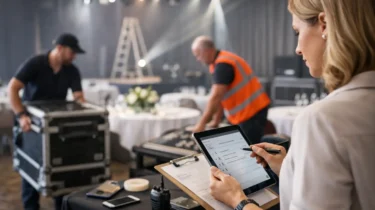
A stand can look excellent in a visual, yet still fail to support the event if the power points are in the wrong place, graphics arrive late or the build team cannot access the hall. Knowing how to plan event delivery means managing those practical dependencies early, not trying to solve them during the final week before the show.
For exhibitors, delivery is more than transporting a stand to a venue. It covers the branded environment, venue services, documentation, timing, installation and handover. A clear plan gives marketing teams confidence that the space will represent the brand properly, while keeping responsibility and costs under control.
Start with the event outcome and the physical brief
Begin by defining what the event needs to achieve. A lead-generation exhibition stand needs a different layout from a product launch, a conference sponsor space or a retail activation. Consider how many people will work on the stand, whether visitors need a private meeting area, what products or demonstrations need power, and how stock, literature and personal belongings will be stored.
This informs the footprint, display system and level of installation support required. A lightweight tension-fabric backdrop and counter may be the right choice for a small conference or roadshow where portability matters. A larger T3 modular stand can create meeting rooms, storage areas and prominent branding for a multi-day exhibition, while retaining the flexibility to be reconfigured and reused at future events.
At this point, create one agreed delivery brief. It should confirm the venue, stand number, show dates, build-up and breakdown hours, floorplan, budget, key contacts and commercial priorities. It should also identify the assets that must be visible, such as campaign messaging, product imagery, QR codes, demonstrations and signage. This avoids a common problem: different teams commissioning graphics, furniture and services without a shared view of the finished space.
How to plan event delivery around venue deadlines
Venue and organiser manuals are working documents, not paperwork to leave until the build date. They set out the rules that affect nearly every part of delivery, including maximum stand heights, permitted construction methods, access arrangements, hanging signage, electrical requirements and compulsory forms.
Read the manual as soon as the stand space is confirmed. Note every deadline, particularly early-order rates for electrics, flooring, internet, cleaning, rigging and vehicle access. Ordering late can increase costs, but the bigger risk is that a required service is unavailable or cannot be installed where the stand design expects it.
Confirm the service plan against the final layout. A socket at the back of a stand may not be useful for a screen or coffee machine positioned at the front. Internet requirements also need scrutiny. A simple connection may be sufficient for lead capture, while live product demonstrations, streamed content or payment systems may require a dedicated wired service. It depends on the activity, expected visitor volume and the consequence of an interrupted connection.
Flooring should be considered early as well. It affects cable routing, finished floor levels, accessibility and the visual quality of the space. If cables need to run beneath raised flooring, make sure their positions are agreed before installation. Leaving this decision until the stand is built creates unnecessary rework.
Turn the design into a buildable specification
A strong event concept must translate into a specification that can be printed, packed, built and approved. Agree the dimensions, materials, artwork sizes, fixing methods, screen locations, counters, furniture and lighting before graphics enter production.
This is where an experienced exhibition delivery partner adds value. They can check whether the proposed structure works within venue rules, whether sightlines are clear and whether practical elements such as storage, cable routes and access are accounted for. A display should be impressive from the aisle, but it also needs to work for the people standing in it for eight hours.
Artwork approval deserves a controlled process. Supply print-ready files to the agreed templates, check brand colours and proof all copy carefully. Confirm which graphics are reusable and which are campaign-specific. Modular hardware can be retained for future events, with replacement graphics used to refresh messaging or adapt the same structure to a different footprint. This can reduce repeat costs, but only if the hardware dimensions and graphic specifications are documented accurately.
For signage, choose materials according to the environment and intended lifespan. Foamex is a practical choice for many internal event signs. Acrylic can create a premium finish for reception or product displays, while DiBond offers a durable rigid option. Correx may suit short-term directional signage where low weight and cost are priorities. The right material is not simply the most expensive one; it is the one that performs reliably for the event conditions and planned reuse.
Build compliance into the delivery plan
Health and safety documentation should be developed alongside the design and installation plan. Venues commonly require risk assessments and method statements, sometimes alongside insurance details, construction plans, fire ratings and electrical information. These requirements vary by organiser and venue, so assumptions can be costly.
A risk assessment should reflect the actual work being undertaken, from unloading and manual handling to working at height, electrical connections and the use of tools. The method statement should explain the sequence of work, responsibilities and control measures. Generic documents may be rejected or, worse, fail to address a genuine site risk.
Clarify who is responsible for each element. If a client has appointed a separate AV supplier, furniture company or catering provider, their delivery and installation arrangements still need to fit the master schedule. One accountable event delivery lead can coordinate these moving parts and prevent a stand team waiting for equipment that has not yet cleared loading-bay procedures.
Create a logistics plan that accounts for real conditions
Event logistics are governed by time slots, loading bays, vehicle restrictions and hall access. A lorry arriving at the wrong time may be turned away, even when the stand build is scheduled for that day. Confirm vehicle details, driver contacts, unloading arrangements, delivery labels and booking references well in advance.
Pack and label components in a way that supports the build sequence. Essential structural parts, graphics and fixings should be easy to identify, not buried among surplus literature or giveaways. For portable displays, check cases, frames, feet, fabric graphics and instructions together before dispatch. For larger modular stands, use an itemised packing list so the build team can verify all components on arrival.
Build-up schedules should allow for the realities of live venues: security queues, busy loading bays, delayed freight and service installation windows. Allowing contingency is sensible, but it should not become a substitute for planning. The aim is to complete the main structure and graphics with enough time left for lighting checks, product placement, cleaning and a proper client handover.
Plan installation, testing and handover
Installation is the point at which design decisions meet the venue floor. The build team should work from current drawings and a confirmed scope, with a named contact available to approve practical decisions if conditions differ from the plan.
Once the stand is built, carry out a structured check rather than relying on a quick visual inspection. Test screens, lighting, power supplies and internet access. Check that every graphic is clean, correctly aligned and free from visible joins or damage. Walk the visitor route, making sure meeting areas are usable, storage is accessible and safety notices or fire points are not obstructed.
A useful handover also covers the operational details that are easy to miss: where spare graphics are stored, how display lighting is controlled, who holds keys, what to do if a screen fails and when the breakdown team will return. This is especially valuable when the people operating the stand were not involved in its planning.
Trade Show Solutions can coordinate the display hardware, printed graphics, venue services, compliance documentation, logistics and installation as one managed delivery process. That reduces the burden on internal teams and gives exhibitors a clear route for decisions and updates.
Treat breakdown and reuse as part of the job
Event delivery does not end when the doors close. Confirm the breakdown time, collection arrangements and where packed items will be held. Reusable modular frames, tension-fabric graphics, counters and accessories should be inspected before they leave the venue. Record any damage and separate campaign-specific materials from items intended for future use.
A short post-event review is worth scheduling while the experience is fresh. Note what visitors responded to, whether the layout supported conversations, which services were used and what created avoidable friction. Those observations turn the next event from another complex project into a more efficient repeatable process.
The best delivery plan leaves room for the unexpected, but gives every supplier and team member a clear next action. When the stand, services, paperwork and people are planned as one operation, event day becomes a chance to meet customers rather than manage problems.