
Rental Versus Reusable Displays: Which Fits?
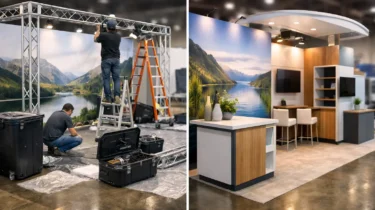
A 6m x 3m shell-scheme space can look very different on paper from how it performs at a busy exhibition. The decision between rental versus reusable displays affects more than the initial stand cost. It determines how quickly your team can adapt to a changed floorplan, how reliably your brand appears across multiple events, and who carries the practical burden of transport, installation and venue compliance.
For some exhibitors, hiring a complete stand is the most sensible route. For others, owning modular hardware or portable tension-fabric displays creates better long-term value and greater control. The right answer depends on your event programme, internal resource, stand requirements and the level of flexibility you need on site.
Rental versus reusable displays: start with your event plan
The most useful question is not simply, “Which option is cheaper?” It is, “How will we exhibit over the next one to three years?” A business attending one major trade show with a large, highly specific footprint has different needs from a marketing team running six regional conferences, roadshows and product launches each year.
Rental displays suit one-off events, unusual stand sizes and projects where the design needs to make a strong statement without creating a long-term storage commitment. A rented modular stand can be specified around the venue footprint and combined with counters, lighting, flooring, large-format graphics and meeting areas. It is particularly effective when a client needs professional installation but has no reason to retain the structure after the event.
Reusable displays are usually a better fit for organisations with a regular exhibition calendar. Tool-free modular systems can be reconfigured for different pitches, while tension-fabric backdrops and portable display kits travel efficiently between events. The hardware remains consistent, and only the graphics need updating when campaigns, messages or product ranges change.
This distinction matters because stand hardware and printed graphics have different working lives. A well-maintained reusable frame can support many events. Graphics may be replaced more frequently to reflect a new campaign, service offer or brand refresh. Buying the right hardware once can therefore reduce repeat spend without making the display feel repetitive.
When rental displays make commercial sense
Hiring is often the right choice when the brief is ambitious but temporary. Perhaps you have secured a prominent island space at an industry show, are launching a new product, or need a larger presence than your usual event format. Rental gives you access to a tailored environment without purchasing a system designed for a stand size you may not use again.
It also works well where event requirements are uncertain. Floorplans can change, venues may impose height restrictions, and sponsorship packages sometimes include non-standard spaces. A rental solution can be planned around the confirmed site rather than forcing an owned system into an unsuitable layout.
A rental package can also simplify delivery. The display provider can coordinate production, transport, installation and breakdown, as well as practical items such as electrics, flooring and furniture where required. For busy marketing teams, this reduces the number of suppliers and handovers involved in preparing for the show.
That convenience is valuable, but it should be assessed clearly. Rental does not mean there is no planning required. Stand plans, artwork approvals, venue deadlines, risk assessments, method statements and access arrangements still need managing. The advantage of an experienced delivery partner is that these operational details are handled as part of one coordinated build rather than left for your team to chase separately.
Where reusable displays deliver stronger value
Reusable displays earn their place through repetition. If your business attends several exhibitions, conferences or sales events each year, the cost of owning hardware can be spread over multiple uses. The more often the system is deployed, the more compelling the investment becomes.
Modular systems are especially useful for brands that book varied space sizes. The same framework may form an open 6m x 3m stand at one event, a compact corner layout at another and a branded meeting area at a conference. This allows the physical structure to change with the event while retaining a recognisable brand presence.
Portable tension-fabric displays offer a different kind of flexibility. They are lightweight, quick to assemble and well suited to roadshows, smaller conferences, recruitment events and product demonstrations. A fabric backdrop, counter and supporting signage can create a polished branded setting without the transport and installation demands of a large custom build.
Ownership does introduce responsibilities. Hardware must be stored safely, checked between events and packed correctly for transport. You also need a clear process for ordering replacement graphics and maintaining an accurate inventory of frames, connectors, cases and accessories. These are manageable requirements, but they should be built into the decision rather than treated as an afterthought.
Compare the costs beyond the quote
The purchase price or hire quote is only one part of the calculation. A useful comparison includes the full cost of getting the display from concept to a functioning stand on the exhibition floor.
With a rental stand, account for design, graphics, installation, dismantling, transport and any venue services. Depending on the venue, this may include electrics, internet, flooring, rigging or timed delivery access. A lower initial stand price can become less attractive if essential services and on-site labour are not included or clearly scoped.
With a reusable system, consider the upfront hardware investment, new or replacement graphics, storage, transport, installation support and refurbishment over time. A reusable stand can still be professionally installed, particularly where the configuration is larger or the venue has complex build rules. Reusability does not require your team to become a stand-building crew.
There is also a cost attached to internal time. If an event manager is coordinating separate print, stand, logistics and installation suppliers, the apparent saving can disappear quickly. A joined-up approach provides clearer accountability, especially when an issue arises shortly before build day.
Brand consistency versus creative change
Some teams worry that reusable hardware will make every event look the same. In practice, that depends on the design strategy. A quality modular system provides a reliable structure, not a fixed campaign. New fabric skins, graphic panels, signage boards, counters and digital elements can change the look substantially while retaining the same core framework.
This can be a practical advantage. Your exhibition presence remains recognisable to returning visitors, but the messaging can be tailored to each audience. A sales-led show may need large product benefits and meeting space, while a recruitment event may focus on culture, vacancies and employee stories.
Rental displays allow greater freedom for a completely bespoke statement, particularly for a flagship event. They are often the better option when the stand architecture itself is central to the campaign, such as a product theatre, enclosed demonstration area or high-level branded feature. However, bespoke does not automatically mean effective. Clear visitor flow, visible messaging, usable storage and enough power points often matter more than decorative complexity.
The operational questions to settle early
Before choosing either route, establish how the stand will work in the actual venue. Confirm the allocated footprint, height limit, open sides, loading access, build timetable and exhibitor manual requirements. These details influence whether a portable display is sufficient, whether modular hardware can be configured effectively, or whether a rental build is more appropriate.
You should also decide who is responsible for installation, services and compliance documentation. Larger builds may require risk assessments and method statements, alongside coordination with venue contractors for electrics, flooring and internet. Leaving these tasks until artwork is approved creates unnecessary pressure and can limit the options available.
For reusable equipment, make sure cases, storage and transport are proportionate to your team’s capacity. A display that looks excellent but needs multiple people, unsuitable vehicles or difficult storage may not be the practical choice for frequent regional events. Conversely, a system that is too small for your principal exhibition may restrict lead generation and undermine the investment you are making in the event.
A practical way to choose
Choose rental when the event is one-off, the footprint is unusual, the brief is highly bespoke or you need a larger presence without retaining hardware afterwards. Choose reusable displays when you have a repeat event programme, need adaptable layouts and want to refresh branding through replacement graphics rather than rebuilding from scratch.
Many businesses benefit from a combination. A reusable tension-fabric display can cover conferences and roadshows, while a rented modular build supports the annual flagship exhibition. The key is to plan the display estate as a working asset, not as a series of isolated purchases.
Trade Show Solutions can help assess the stand format, graphics, logistics and venue requirements together, so the display choice supports the event rather than adding another operational task. Start with the events you know are coming, then select hardware and support that will still work when the next floorplan, campaign or deadline changes.