
Best Materials for Event Signs at UK Venues
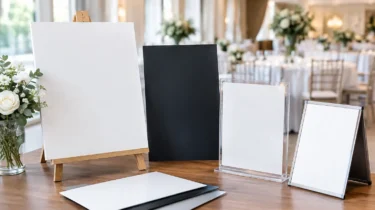
A well-designed exhibition stand can lose impact quickly if its signs bow, glare under venue lighting or arrive with unsuitable fixings. Choosing the best materials for event signs is not simply a print decision. It affects how your brand looks on site, how easily the graphics can be installed, whether they meet venue requirements and how much of the display can be used again at the next event.
For most exhibitors, the right choice comes down to where the sign will be used, how long it needs to last, the finish required and the way it will be transported and fitted. A temporary directional sign at a one-day conference needs something very different from premium reception branding, an outdoor roadshow board or permanent graphics within a modular exhibition stand.
Choosing the best materials for event signs
Start with the job the sign needs to do rather than selecting a material by price alone. Consider its position, likely handling, viewing distance, lighting and whether it will be fixed to a wall, mounted to a frame, suspended or freestanding. A large-format graphic can look excellent in the artwork proof but still underperform if the board is too thin for its size or the surface catches every reflection from overhead lighting.
Venue rules matter too. Exhibition halls may specify acceptable fixing methods, height limits, fire ratings or restrictions on drilling and adhesive use. Where a stand includes electrics, flooring, internet connections and overhead structures, signage should be planned alongside the wider build. This avoids last-minute changes when access is limited and build schedules are tight.
Reusability is another commercial consideration. If your team attends several trade shows each year, a durable sign material or replaceable graphic system often provides better value than producing disposable boards for every event. Conversely, lightweight short-life materials can be the sensible choice for a single promotional activation, particularly where quantities are high and the signs have a limited purpose.
Foamex: a versatile choice for indoor event signage
Foamex, also known as foamed PVC, is one of the most commonly used materials for exhibition and event signs. It is lightweight, smooth and available in different thicknesses, making it suitable for branding panels, wall-mounted signs, product information boards, menu boards and directional graphics.
For indoor events, 3 mm Foamex is often suitable where the board is supported by a wall or a display structure. A thicker option, such as 5 mm, gives more rigidity for larger panels or signs that need to feel more substantial. The smooth white face produces strong printed colour and clear detail, so it works particularly well for branded messages viewed at close range.
The trade-off is durability. Foamex can mark or dent if it is repeatedly moved without protection, and very large unsupported panels may flex. It is a practical material for short to medium-term use, but it is not usually the first choice for signs exposed to prolonged outdoor weather or hard daily handling.
DiBond: for durable, premium-looking boards
DiBond is an aluminium composite material with a solid polyethylene core. It is flatter and more rigid than Foamex, giving it a more premium feel for reception signs, feature graphics, wayfinding and branded panels that need to remain in use beyond a single event.
Its strength makes DiBond a good option for larger-format signs, outdoor applications and displays that will be transported and installed more than once. It resists warping better than lighter board materials and can be cut to shape, drilled or fitted with stand-off fixings for a polished finish.
That durability comes with additional weight and cost. DiBond requires more careful handling and may need more substantial fixings, especially where it is mounted at height. For a temporary conference sign that will be used once, it can be more material than the job requires. For a roadshow, showroom or event programme where signs need to stay smart over time, the investment is often justified.
Acrylic: when finish and detail matter most
Acrylic is chosen when the sign itself needs to make a statement. Available in clear, white, black and coloured finishes, it is well suited to premium branding, reception panels, sponsor signage, product launches and display areas where a clean, contemporary appearance is required.
Printed acrylic can be used on its face or reverse-printed behind a clear panel to create depth and protect the graphic. It also works well with stand-off fixings, creating a neat gap from the wall or display surface. This gives a level of finish that is difficult to achieve with standard printed board.
However, acrylic is heavier than Foamex and can be scratched or cracked if mishandled. It needs suitable protective packing during transport, particularly when multiple panels are travelling between venues. It is best used where visual quality and a lasting impression outweigh the need for the lightest possible solution.
Correx: lightweight signage for short-term use
Correx is a fluted polypropylene board with a corrugated internal structure. It is light, economical and weather-resistant, which makes it useful for temporary outdoor signs, car park directions, construction-area notices, event entrance signs and large quantities of wayfinding boards.
Because it is lightweight, Correx is straightforward to carry, fix and replace. It is a sensible choice for an event with changing routes, multiple entrances or a short outdoor activation where a durable-looking premium board is not essential.
The visible fluting and lower rigidity mean Correx is not the material for a high-end exhibition stand or close-up brand presentation. Fine print and detailed photography can be reproduced, but the material does not offer the same smooth, solid appearance as Foamex, DiBond or acrylic. It performs best when the message is direct, the text is large and the sign is viewed from a practical distance.
Tension fabric for reusable branded environments
Not every event sign needs to be a rigid board. Tension-fabric graphics are often the most effective option for large backdrops, feature walls, meeting spaces, hanging signs and portable exhibition displays. The fabric graphic stretches over an aluminium frame to create a smooth, crease-free branded surface that is lightweight to transport and quick to install.
For businesses with a regular exhibition programme, this format offers a useful separation between hardware and graphics. The frame can be retained and used again, while new fabric skins can be produced for product launches, campaign changes or different event audiences. It is particularly effective when signage needs to form part of a wider stand rather than sit separately on a wall.
Fabric is not the answer for every message. Small-format wayfinding, rigid product information panels and signs requiring stand-off fixings are generally better served by board materials. The strongest event environments often combine both: fabric for large-scale visual impact and rigid signage for practical, close-range communication.
Match the material to the installation method
A sign material should always be specified with its installation method in mind. Double-sided tape may be enough for lightweight indoor Foamex panels, while DiBond and acrylic could require drilled holes, stand-offs or a purpose-built mounting system. A sign intended for a modular T3 stand may need a different fixing solution again, especially if the hardware is to be reused without damage.
This is where early planning prevents unnecessary cost. If graphics are designed before the stand structure, fixing points and access requirements are confirmed, the artwork may need to be reworked or the intended material substituted. Coordinating signage with stand planning, flooring, furniture and venue services produces a cleaner result and makes on-site installation more predictable.
For larger builds, it is also worth considering what happens after the event. Signs should be labelled, packed safely and allocated to the correct cases or crates. Reusable boards only deliver value if they can be located, transported and fitted again without avoidable damage.
Get the finish right for the venue
Lighting can change the appearance of every printed surface. Gloss finishes can make colours look vivid but may reflect spotlights, windows and overhead hall lighting. A matt or anti-glare finish is usually easier to read on exhibition stands, conference stages and information boards where visitors will be moving around the space.
Colour consistency matters where signs sit alongside fabric graphics, printed counters, pop-up displays or existing brand materials. Supplying approved artwork, brand references and any critical colour information early gives the production team time to check that the full event environment works together rather than appearing as separate components.
Trade Show Solutions helps exhibitors specify signage as part of a complete physical environment, considering the display hardware, print finish, venue conditions and installation process together. That joined-up approach is particularly valuable when deadlines are short or multiple suppliers would otherwise need to coordinate on site.
The best sign material is the one that supports the event’s purpose without creating extra work for your team. Choose a lightweight board when speed and quantity matter, a rigid premium panel when longevity and finish matter, and reusable fabric systems when flexibility across several events is the priority. Plan the material, fixings and logistics together, and your signs will arrive ready to do their job: guide visitors, strengthen your brand and support confident conversations on the stand.